B.Sc. in Archaeology
Program Profile
The Department of Archaeology is a scientific academic unit established in 2021 concerned with studying archaeological remains from ancient to modern periods.
Fields of Study in the Archaeology Department:
1. Archaeology of Ancient Civilizations
2. Islamic Archaeology
3. Historical Linguistics
Suggestions for Developing the Archaeology Department: More practical training should be provided through fieldwork related to archaeological studies, or through field visits to archaeological sites. We also recommend establishing a scientific museum and an annual cultural festival for archaeological research to showcase archaeological heritage, which would help develop the department further.
Obstacles Facing the Archaeology Department:
1. Lack of suitable academic facilities for archaeology students (study halls, museums, laboratories, etc.).
2. Lack of a dedicated budget to support academic and archaeological activities such as:
- Archaeological research
- Site preservation
- Conducting and publishing archaeological studies inside and outside the region
Occupational profiles of graduates
Graduates of the Archaeology programme are prepared to work in the protection, study, and documentation of cultural heritage.
The programme equips students with fieldwork skills, artifact analysis, and knowledge of historical contexts, enabling them to contribute to preserving the region’s archaeological and historical identity.
Typical roles include:
• Archaeologist (field excavation & site survey)
• Museum curator / museum assistant
• Cultural heritage officer
• Conservation and restoration assistant
• Research assistant in archaeology or history
• Heritage tourism guide
• Documentation & archival specialist
Qualification awarded
Bachelor of Science in Archaeology
Length of programme
4 Years
Number of credits
240 ECTS credits
Mode of Study
Full time on campus
Read more about the programme
Get detailed information about the programme requirements, courses, credits, and educational objectives as a PDF file.
Program Educational Objectives (PEOs)
1.To promote archaeological awareness among students at the college, helping strengthen cultural identity—especially since a significant part of the cultural heritage of Duhok Governorate remains unexplored.
2.Conducting scientific archaeological research using academic methods and publishing the results to contribute to the development of Iraqi, Mesopotamian, and Islamic archaeological studies, and enhancing student participation in scientific and intellectual activities.
3.Training students to achieve academic and professional goals.
4.Strengthening relationships with local society and cultural institutions.
5.Supporting specialized scientific research that documents the cultural, geographical, and linguistic heritage of various ethnic groups.
6.Conducting historical research to reinforce the archaeological documentation of ancient civilizations.
7.Enhancing cooperation with international archaeological missions to raise awareness of the importance of preserving Iraqi heritage and identity.
Program Learning Outcomes
Like other departments, students will have opportunities to work in:
1. Governmental cultural and archaeological institutions
2. Fieldwork teams
3. Archaeological research projects
4. Museums
5. Tourism and heritage organizations
Graduates may also qualify to lead archaeological missions and work in heritage-preservation teams.
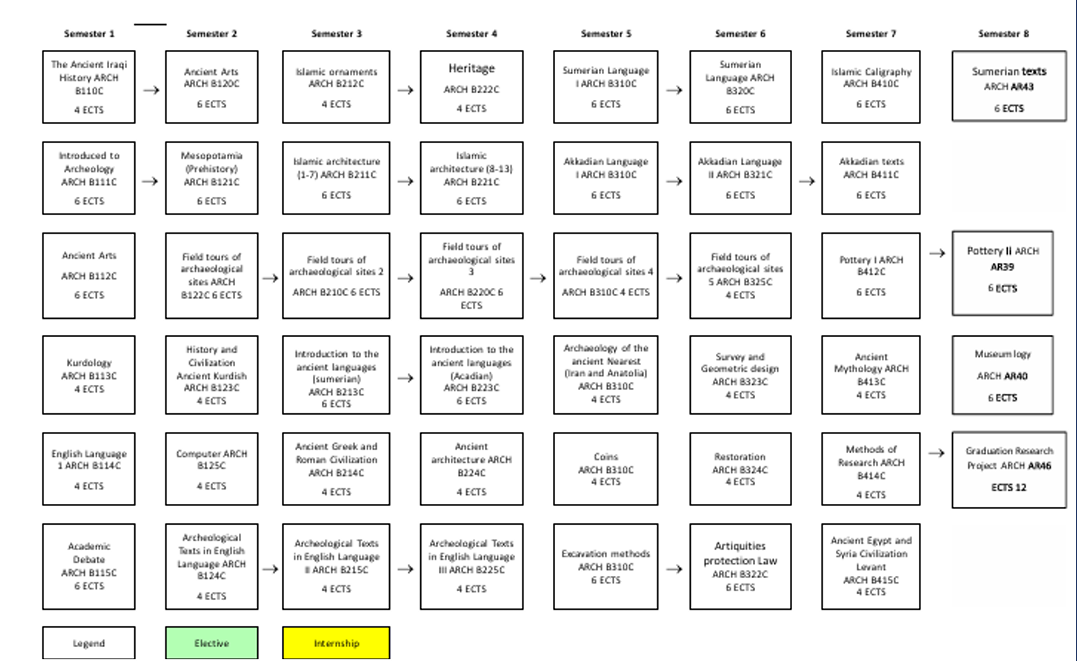
Programme structure diagram with credits
Yearly Timeline
Sept. 1, 2026
⚠️ First year students start around mid-October
⚠️ First year students start exams around 20 of January
July 1, 2027
Check out the full academic calendar on UoD's webstie.
Programme Coordinator

Assistant Professor in Ancient History
Department of Archaeology
College of Humanities
University of Duhok
Apply to the Programme
Public undergraduate admissions in the KRG region are managed centrally by the Ministry of Higher Education through the online ZankoLine portal (regayzanko.com). After Grade 12 Baccalaureate results are released, high schools provide students with unique login credentials to rank their preferred universities and B.Sc. majors during a 10–14 day registration window. Final placement is automatically determined by the student's Grade 12 average, subject choices, and department capacity.